How to Choose the Right Software Development Company
Choosing a software development company is one of those decisions that feels simple until you’re in the middle of it. Everyone’s website looks polished, everyone promises quality, and the quotes can vary wildly for what sounds like the same project. So how do you actually tell them apart — before you’ve spent the money and the months?
The good news: you don’t need to be technical to choose well. You just need to know what to look for. Let’s walk through it together.
Why this choice matters more than it seems
It’s tempting to treat a website or app as a one-off purchase. In reality, the partner you pick shapes how well that product performs for years.
The data backs this up. The Standish Group’s CHAOS research has found for decades that only around a third of software projects are delivered fully successfully — the rest come in late, over budget, or missing features. And a large study by McKinsey & Company with the University of Oxford (5,400 large IT projects) found they ran on average 45% over budget while delivering 56% less value than expected.
The projects that beat those odds tend to share one thing: an experienced, communicative team that plans carefully. In other words, who you choose is one of the biggest predictors of how it turns out.
Look past the lowest price
The cheapest quote is rarely the cheapest project. Poor-quality software has a real, measurable cost: the Consortium for Information & Software Quality (CISQ) estimated the cost of poor software quality in the US at roughly $2.08 trillion in 2020, much of it from failed projects and rework.
There’s also money quietly lost every day when a site is simply built poorly. Google and Deloitte’s “Milliseconds Make Millions” study found that improving mobile load time by just 0.1 seconds increased conversion rates by around 8% for retail and 10% for travel sites. Separately, Google’s research showed that as page load time goes from 1 to 3 seconds, the probability a visitor bounces rises by 32%.
So a partner who cares about speed, quality and performance isn’t a luxury — they’re protecting your revenue.
What to actually look for
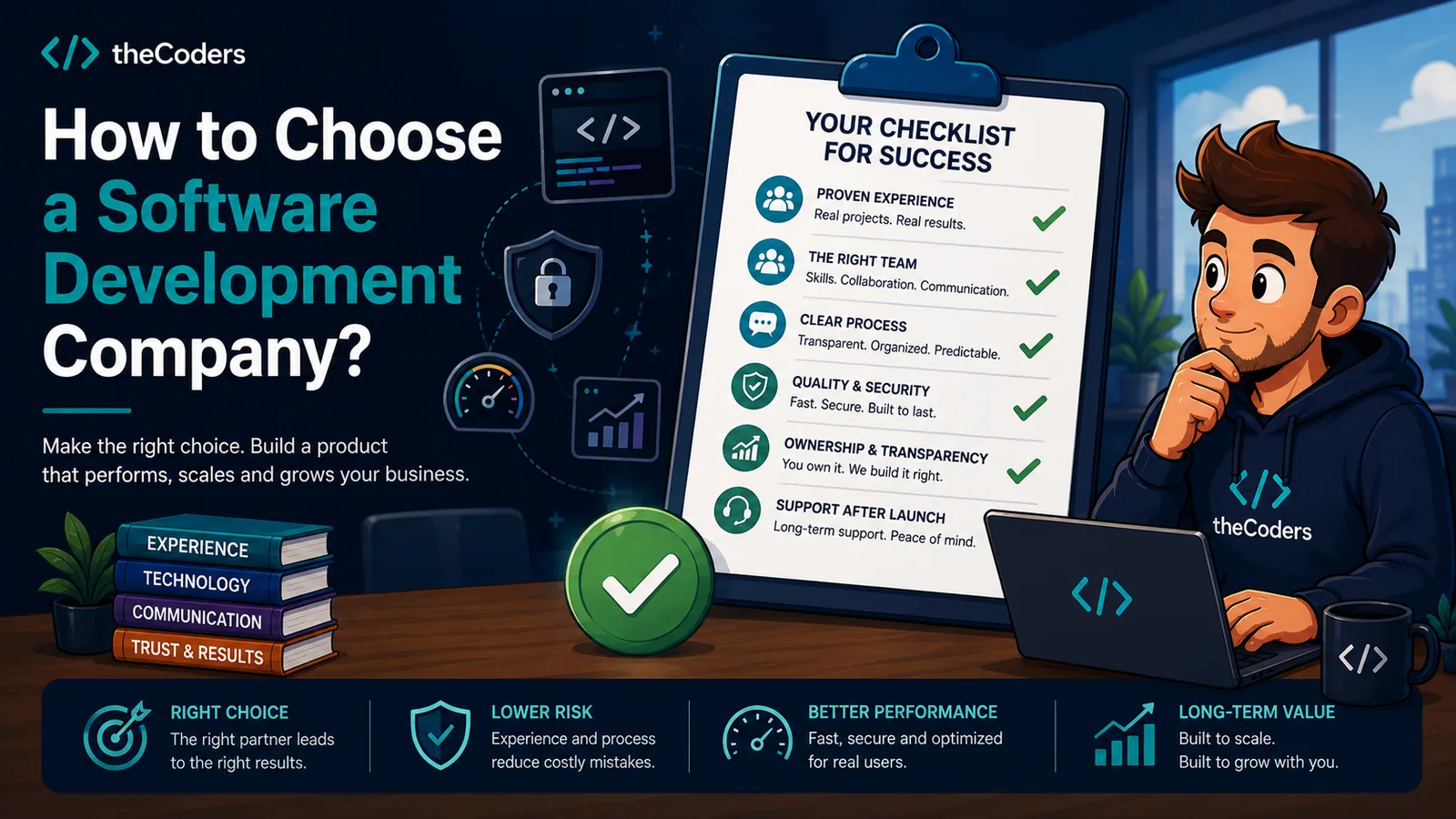
Here’s a practical checklist you can use, even without a technical background.
1. Proven experience and a real portfolio
Ask to see actual projects they’ve delivered, ideally in industries near yours. A strong portfolio and real case studies tell you far more than a slick sales page. Experience is the single biggest factor in avoiding expensive mistakes.
2. A team, not just one person
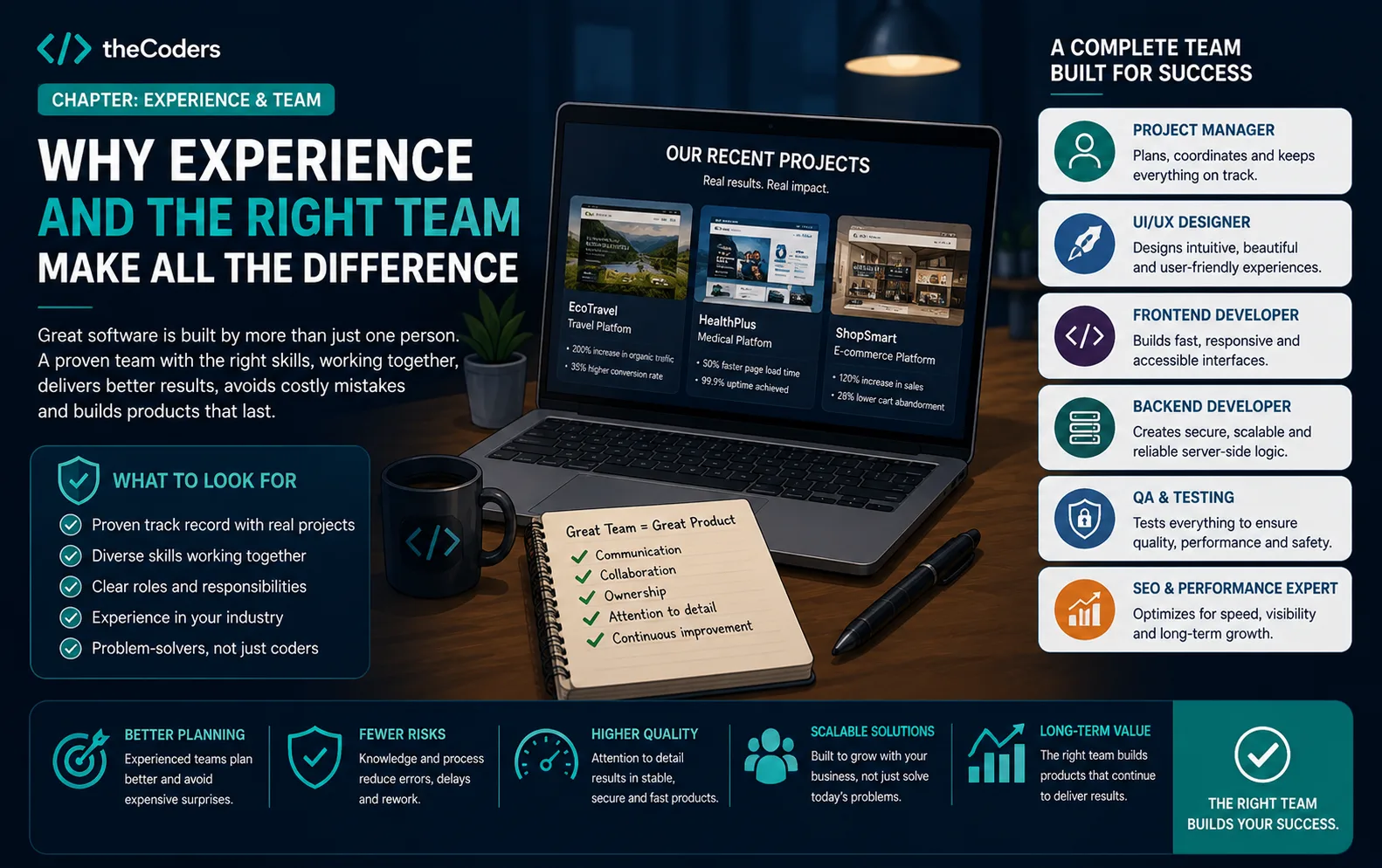
A great product needs several skills working together: UX/UI design, frontend, backend, SEO, performance, security and infrastructure. It’s rare for one person to excel at all of them. Multidisciplinary teams consistently produce better long-term results, so ask who will actually work on your project.
3. Clear communication and process
Notably, CHAOS research repeatedly lists user involvement and clear requirements among the top drivers of project success. If a company listens carefully, asks good questions and explains things without jargon before you sign, that’s a very good sign of how the whole project will go.
4. Do they think about SEO, performance and security?
A beautiful site that Google can’t find, that loads slowly, or that has security holes will quietly cost you customers. A good partner talks about these things early — not as expensive add-ons, but as part of doing the job properly.
5. Do you actually own what you pay for?
This one surprises people. With some “free” or ultra-cheap deals, you don’t own your code, you can’t move to another provider, and even small changes require going back to them. Always ask: do I own the code, the content and the domain?
6. What happens after launch?
A website isn’t “done” on launch day. Ask how updates, backups, security and improvements are handled afterwards — and what that costs. Clear, fair, transparent ongoing terms matter as much as the initial build.
A few good questions to ask before you sign
- Can you show me similar projects you’ve delivered, and their results?
- Who exactly will work on this, and what are their roles?
- How do you handle SEO, performance and security?
- Will I own the code, content and domain?
- What does support and maintenance look like — and what does it cost?
- How do we communicate, and how often, during the project?
Red flags worth noticing
- A price far below everyone else — quality has a cost, and someone always pays it.
- Promises that sound too easy (“done in two days,” “ranked #1 on Google guaranteed”).
- No real portfolio, or vague answers about who does the work.
- Reluctance to let you own your own code.
- All focus on how it looks, none on how it performs.
Conclusion
Choosing a software development company isn’t really about finding the flashiest website or the lowest number on a quote. It’s about finding a team with the experience, honesty and range of skills to build something that keeps working — and keeps earning — long after launch.
Take your time, ask the questions above, and trust the partner who talks to you clearly and shows real results. At theCoders, that’s exactly how we like to start: with an honest conversation about what you actually need, and how to build it right.
Sources
- The Standish Group — CHAOS Report (software project success rates and success factors)
- McKinsey & Company and the University of Oxford — Delivering large-scale IT projects on time, on budget, and on value (2012)
- Consortium for Information & Software Quality (CISQ) — The Cost of Poor Software Quality in the US (2020)
- Google and Deloitte — Milliseconds Make Millions (2020), on mobile speed and conversion rates
- Google / SOASTA research on mobile page load time and bounce rates (2017)