Why 80% of Startups Fail Before They Ever Launch
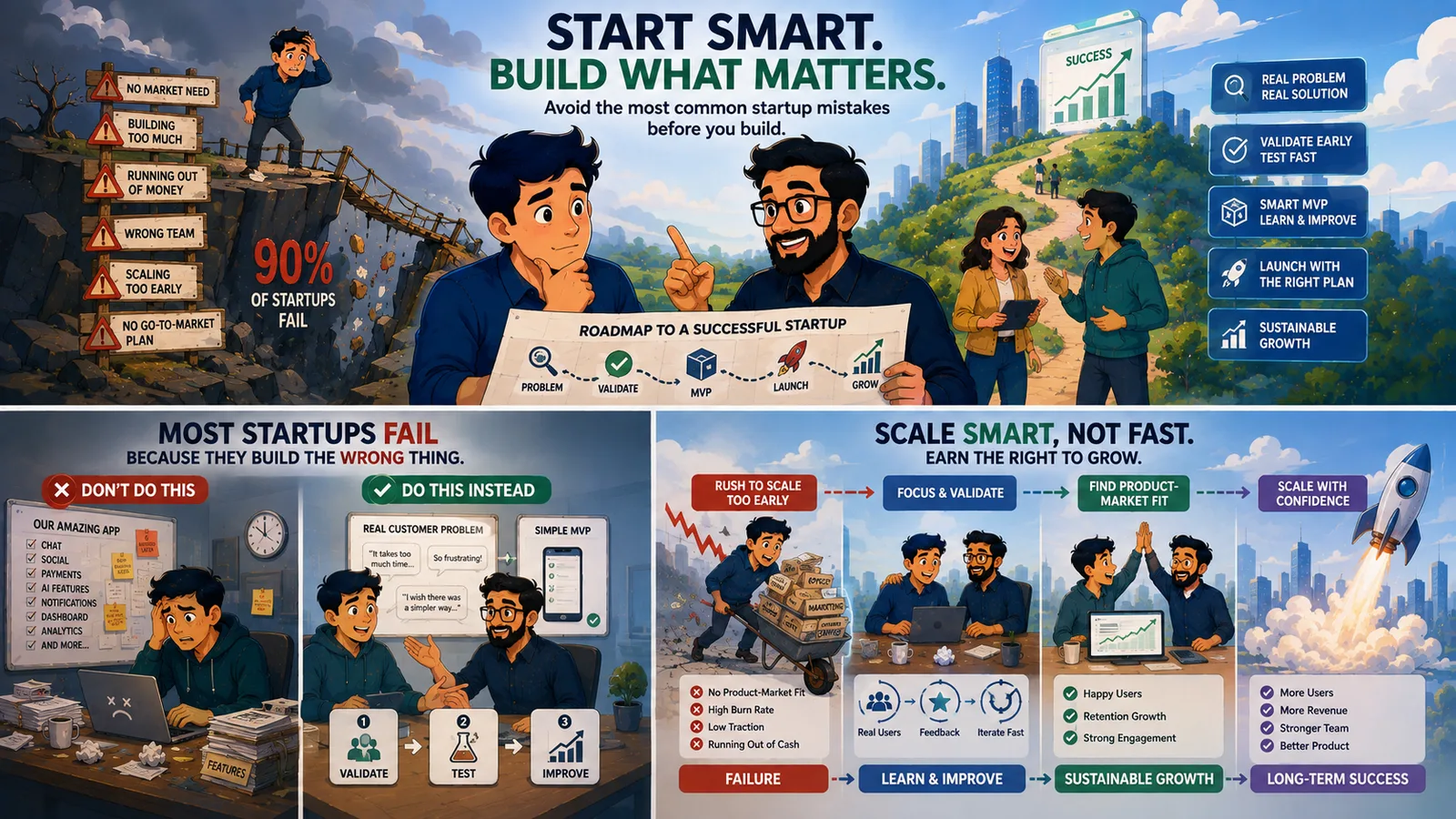
Starting a company has never been easier — and failing at it has never been better documented. Widely cited estimates suggest that roughly 90% of startups ultimately fail, and a striking share of them stumble in the earliest phase: before, or right around, launch. Long before the market ever rejects the product, the founders have often already built the wrong thing.
The reassuring part is that these failures follow patterns. When CB Insights analyzed why startups die, the single most common cause wasn’t bad technology or bad luck — it was building something people didn’t actually need. Understanding these patterns is the closest thing entrepreneurs have to a map. Let’s walk through the biggest ones, step by step, with what to do about each.
1. No market need — the number-one killer
In CB Insights’ research on startup post-mortems, “no market need” ranks as one of the top reasons startups fail, cited in a large share of cases. The founders fall in love with a solution before confirming that a real, painful problem exists.
Example: Juicero raised over $100 million for a Wi-Fi-connected juice press — then journalists showed the juice packs could be squeezed just as well by hand. Impressive engineering, no real need. It shut down within months of wider launch.
What to do: Before writing code, confirm the problem is real, frequent and expensive enough that people will pay to solve it. Interview 20–50 potential customers and listen for genuine frustration, not polite encouragement.
2. Building before validating
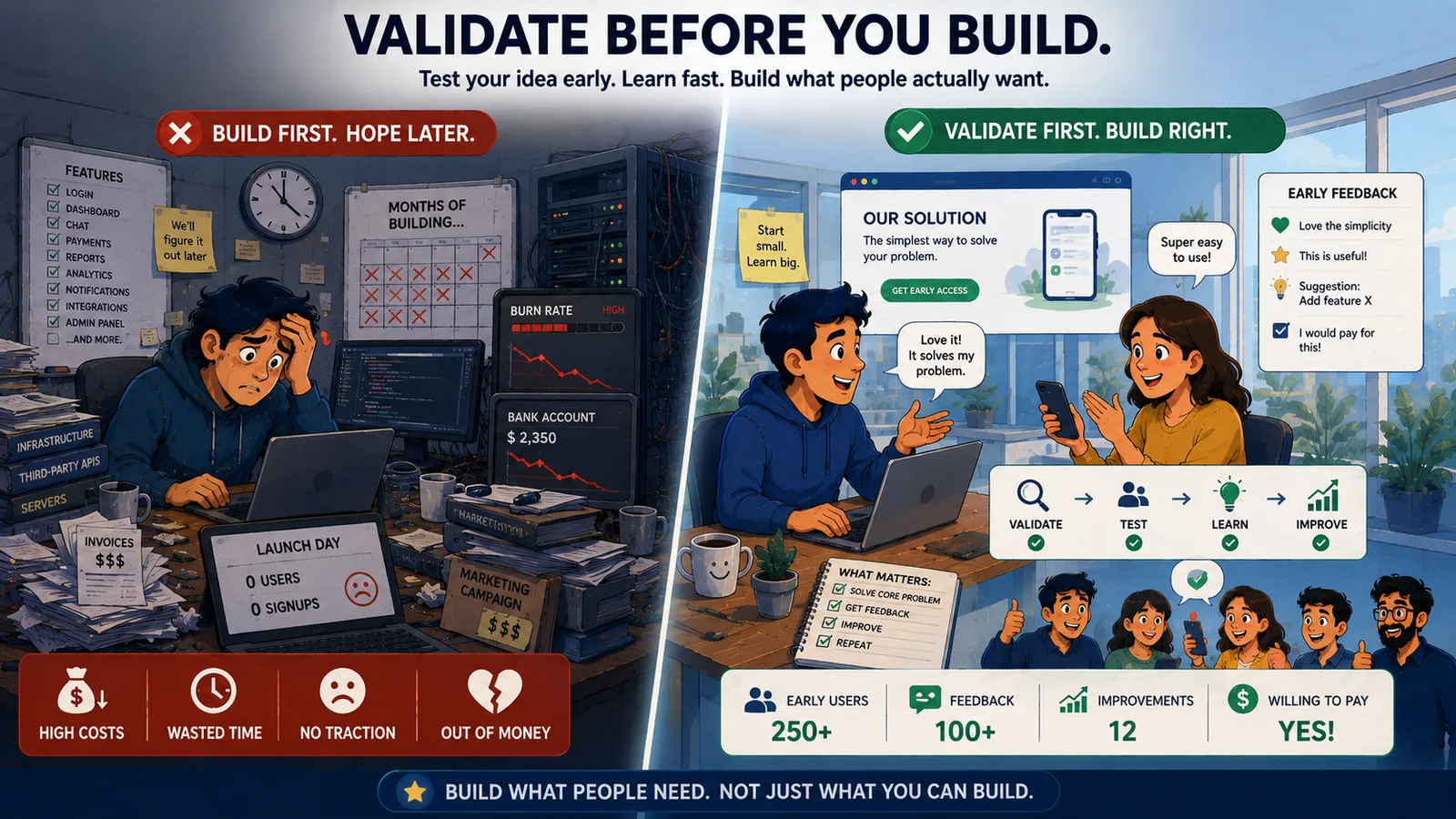
Closely related, but distinct: even when a real need exists, many teams spend months (and their entire budget) building a full product before testing whether anyone wants their specific version of it. By the time they launch, the runway is gone and the assumptions were never checked.
Example: The founders of what became Buffer famously validated demand with nothing more than a landing page describing the product and a pricing plan. Only after people clicked “buy” did they build it. That single page saved them from building something no one would pay for.
What to do: Ship a Minimum Viable Product (MVP) — the smallest version that solves the core problem — and get it in front of real users fast. Let their behavior, not your assumptions, guide what you build next.
3. Running out of cash before launch
CB Insights also found that running out of money and failing to raise new capital is among the very top causes of startup failure. Pre-launch, this usually means the team burned the budget building too much, too slowly, before generating any revenue or proof to attract investors.
What to do: Treat runway as oxygen. Scope the first version ruthlessly, set a clear budget and timeline, and define in advance what evidence (users, signups, early revenue) you need before spending more. Launch something small that starts teaching you the market while you still have money left.
4. The wrong team — or one person trying to do everything
A great product needs several disciplines working together: product, UX/UI, engineering, and go-to-market. Many pre-launch startups fail because one founder tries to do all of it, or because the team has technical skill but no one who truly understands the customer.
What to do: Be honest about the gaps. Whether through co-founders, hires or an experienced development partner, make sure the product, the engineering and the understanding of the user are all covered before you commit months of work.
5. Premature scaling
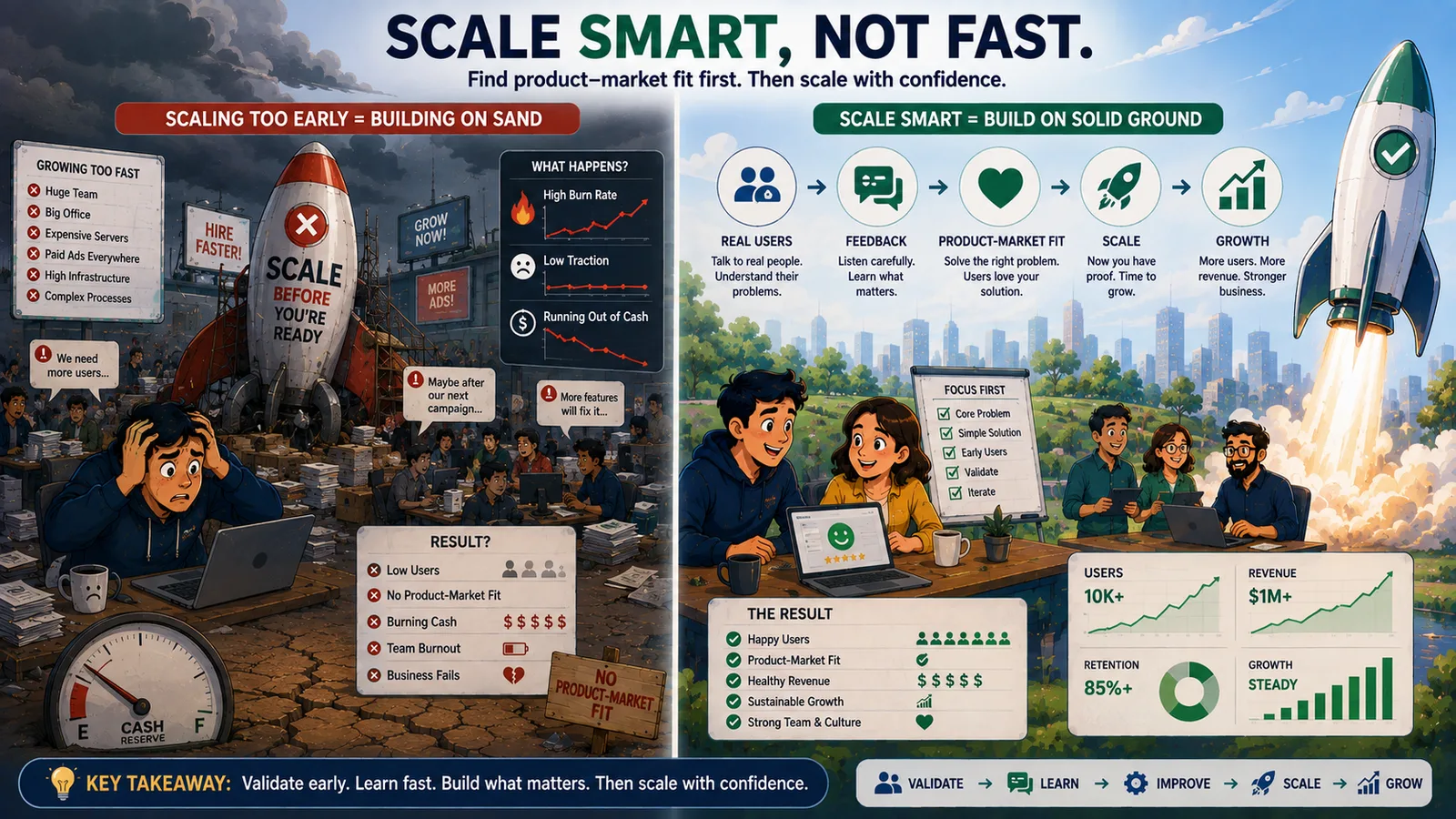
Research from Startup Genome, which analyzed thousands of startups, identified premature scaling — growing headcount, spending or infrastructure faster than the business is ready for — as a leading cause of failure. Some teams try to scale a product that hasn’t yet proven anyone wants it, and collapse under their own weight before or just after launch.
What to do: Earn the right to scale. Find product-market fit first — evidence that a specific group of users genuinely want and keep using your product — and only then pour fuel on the fire.
6. No go-to-market plan
Some teams do build something people want, then fail anyway because they never planned how anyone would find it. Marketing is treated as an afterthought for “after launch,” so launch day arrives to total silence.
Example: Countless well-built products launch to crickets simply because the founders assumed “if we build it, they will come.” They rarely do.
What to do: Start marketing before the product is finished. Build an email waiting list, share the journey, create useful content and line up early users so that launch day has an audience, not an empty room.
The common thread
Notice what nearly all of these have in common: they’re about people and problems, not about code. A startup rarely dies because the technology was too slow. It dies because it solved a problem nobody had, ran out of money proving it, or never told anyone it existed.
This is genuinely good news for founders, because every one of these failure modes is preventable with research, validation and disciplined execution — long before a single line of production code is written.
What experienced teams do differently
At theCoders, we treat the discovery phase as seriously as the build. Before development begins, we work with founders to pressure-test the problem, the market, the audience and the business model — and to define the smallest version worth building first. Our goal isn’t just to deliver working software; it’s to help make sure the software is worth delivering.
Because in the end, the startups that survive aren’t usually the ones with the best code. They’re the ones that understood their customer before everyone else did.
Sources & research
- CB Insights — The Top Reasons Startups Fail (analysis of startup post-mortems; “no market need” and “ran out of cash” among the leading causes)
- Startup Genome — Startup Genome Report, on premature scaling as a leading cause of failure
- Harvard Business Review — research and publications on why startups fail and the role of product-market fit
- Y Combinator — startup guidance on validation and product-market fit
- Publicly reported case studies (e.g., Juicero, Buffer) illustrating validation and market-need lessons
Note: startup failure rates vary by source, definition and time period; the figures above reflect widely cited estimates and research rather than a single universal statistic.